


Everyone has heard of the “carbon footprint.” Ask a “regular” person who is unlikely to subscribe to a newsletter about climate policy, and they will know it. It’s stunning how deeply embedded in culture this idea is.
And no wonder. Fossil fuel companies popularized it, spending a fortune spreading it. I’m talking about north of $100 million a year in ad spending in the mid-2000s. Imagine what you could make popular if you had that much cash (and a planet) to burn.
It worked. The carbon footprint stuck and this shoddy paradigm persists.
We should replace it. That’s the big idea behind my new book: The Carbon Wave: A Story of Democracy, Parenthood, and the Race to Protect Our Planet. It will be out in the world very soon, on September 1st, and you can preorder it, which is a huge help to making the book travel farther. Also for the audiophiles out there, I read the audiobook, which I am quite excited about sharing.
In today’s post, I want to give you a sneak peek into the “carbon wave” idea, show you a new carbon wave calculator I built, tell you about the book tour events you can come to in person, and (re)start my online Climate Book Club.
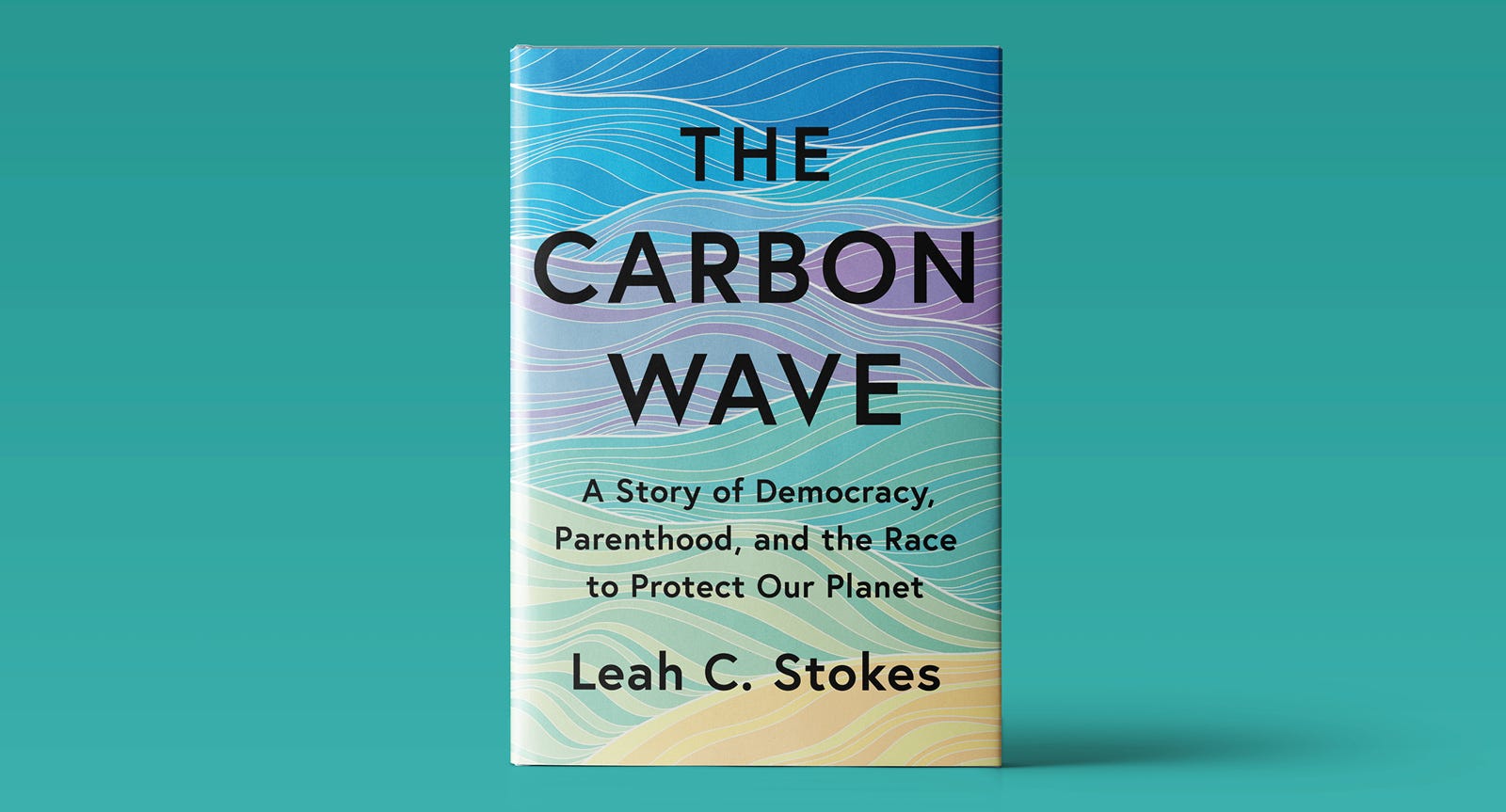
What is a carbon wave?
We need to move away from the idea that individual behavior change will transform our energy system or tackle climate change. The carbon wave is a paradigm shift. Where a footprint measures what you do as an individual, a wave measures what you change with others: the impact you can have working as a collective to transform the energy system itself, not just your own habits.
As I write in the book:
Rather than thinking of a single person leaving a footprint in the sand, think of waves in the ocean. These waves are made by strong, sustained winds blowing in the same direction. Over generations, these waves are built, as thousands of people work together to create change, adding to the effort of the people before them. And just as waves wash away footprints on a beach, our carbon waves can erase our carbon footprints. Whatever negative impacts we have on the planet from living in a fossil fuel society can be offset by our activism, if we join with others to change the system. Working together, we can make waves.
My goal with this book was to write a story that shows how that works in practice, because it can sound abstract. What does it mean to join with others to change our energy system?
The Carbon Wave tells the story of how people joined together to pass the largest climate law in American history. It is told through the perspective of four young parents who worked on the law in and out of government, chronicling the law’s turbulent negotiations and their own personal sacrifices. This collective effort that made the the Inflation Reduction Act possible is how policy change happens. If each of us stayed focused on our own behavioral changes, this transformational law would have never happened.
The Carbon Wave Calculator
One of the ways that the fossil fuel company BP popularized the carbon footprint was by sticking a “calculator” on their website. They got almost 250,000 users in their first year, running their “lifestyle” through an estimator that just told them to feel guilty and try flying less. But I think this also shows just how hungry people are to do something that matters.
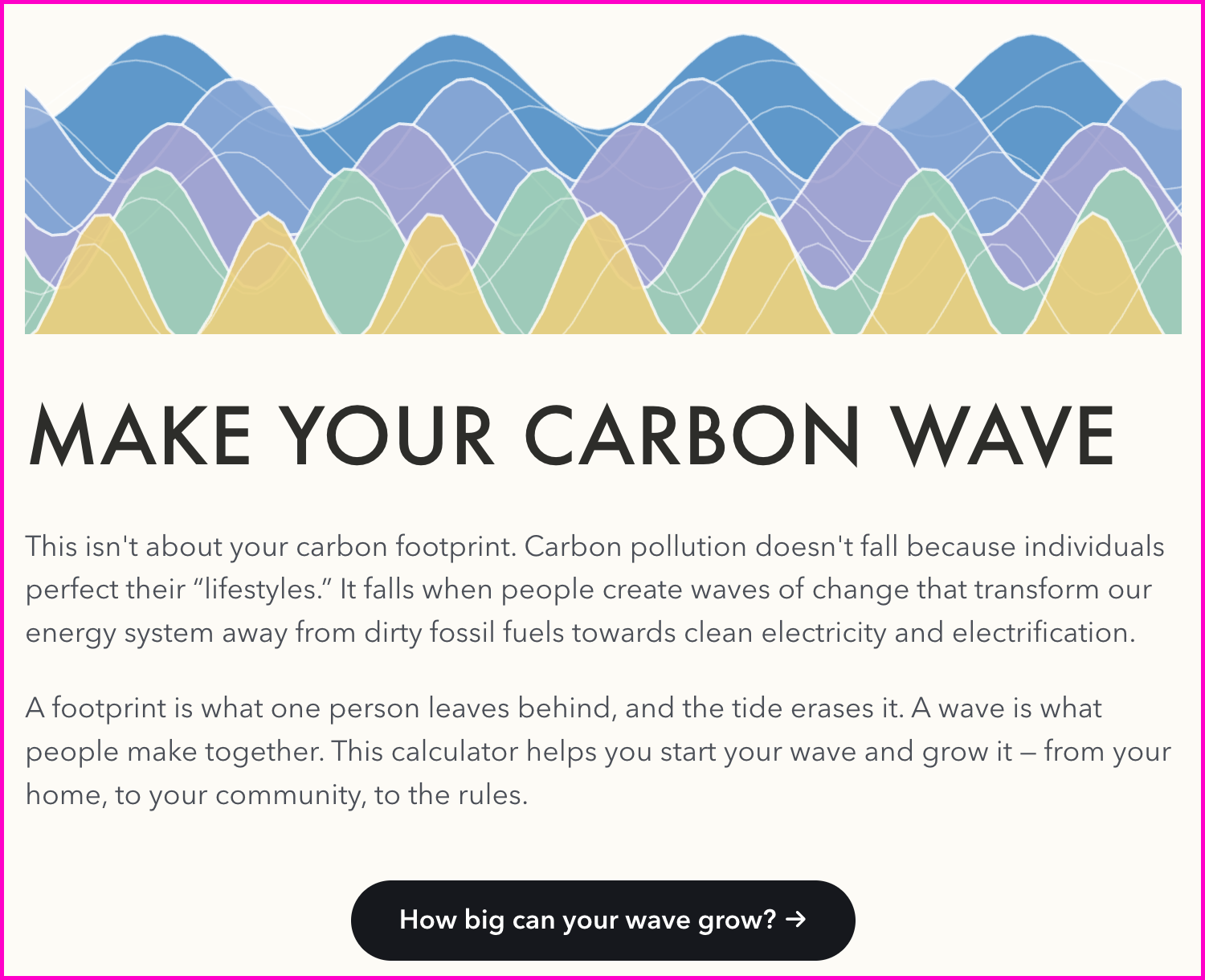
So I’m trying the same tactic with the carbon wave. If you want to think through ways that you can maximize your impact, you can try calculating your carbon wave using an online interactive tool at thecarbonwave.com/calculator. The tool pushes people towards infrastructure changes, like clean electricity and electrification, as well as getting involved in campaigns to change policy.
My hope is it will spark conversations about how systems change happens, and how individuals can catalyze it.
Book Tour!
This fall, I’ll be taking The Carbon Wave on tour and I would love if you came to an event! There are going to be some incredible guests joining me at a lot of them too. Here’s a brief run-down of the events I have planned for September—I’ll be adding more in October and November, for example in Los Angeles. You can find full, up-to-date book tour information and links to sign up when needed at thecarbonwave.com/tour.
September 4, 7 PM: Brookline, MA, Brookline Booksmith (w/ David Abel, Gina McCarthy, and Varshini Prakash)
September 9, 7 PM ET/4 PM PT: Virtual Event with Third Act (w/ Bill McKibben and Rebecca Solnit)
September 10, 5:30 PM: Santa Barbara, CA, Community Environmental Council’s Environmental Hub
September 14, 7:30 PM: Seattle, WA, Town Hall Seattle (w/ David Roberts)
September 16, 7 PM: San Francisco, CA, Green Apple Books on 9th Ave (w/ Rebecca Solnit)
September 18, 7 PM: Washington, D.C., Politics and Prose at the Wharf (w/ Maxine Joselow, Gerry Petrella, and Christy Goldfuss).
September 21, 11 AM: New York, NY, Tribeca (Climate Week NYC w/ Katharine Wilkinson)
September 23, 5:30 PM: New York, NY, NYU (w/ Bill McKibben, Jay Inslee, and David Wallace-Wells)
September 24, 4:30 PM: Toronto, ON, Trinity College, UToronto (w/ Jessica Green)
September 29, 3:30 PM: Vancouver, BC, University of British Columbia (w/ Kathy Harrison)
Climate Book Club
Back before Twitter was a cesspool, I used to run an online “Climate Book Club.” We all hung out at a specific time and sent each other our thoughts in tweets and it was fun. I’ve decided to try that again here, virtually, on Substack.
On launch day, September 1st, I will send another post out to start the conversation. Once you get your hands on a copy, you can pop into the thread to ask questions as you’re reading the book. It should be fun.
Thanks in advance, too, if you decide to share the book on social media, write a review on Amazon or Goodreads, or talk to your friends about it. That really helps the book make waves (these puns write themselves).
Plus if you decide to read The Carbon Wave in your own book club, we’ve written some discussion questions you can use as a starting place.
Ultimately, I hope this book will bring people together and serve as a catalyst for more carbon waves. Because that’s the only way we are going to dismantle the fossil fuel energy system: together.